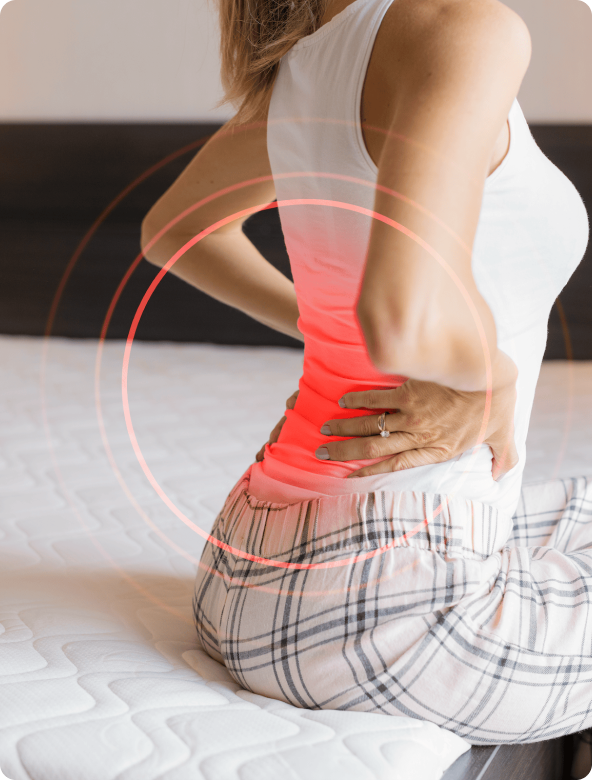
Back pain: a common ailment, but not inevitable
Lower back pain affects 80% of adults at one point or another. Fortunately, effective solutions exist. Physiotherapy provides concrete tools to relieve pain and regain your mobility.
Lower back pain, also known as lumbago and commonly referred to as 'back pain', can be a debilitating experience for many people. This condition can affect movement, quality of life, emotional well-being, and the ability to work. Fortunately, there are effective solutions to reduce or even eliminate the pain. One of the most commonly used approaches is physiotherapy. In this article, we will explore the causes of lower back pain, the benefits, and the effectiveness of physiotherapy as a treatment.
Is lower back pain common?
Lower back pain is a common health issue in Canada. According to Statistics Canada, about 16% of the Canadian population aged 12 and over reported experiencing chronic lower back pain in 2019. These pains can be caused by various factors, such as a sedentary lifestyle, overweight, poor posture, injuries, and stress. The prevalence of lower back pain increases with age, making it a major public health problem.
What are the common causes of lower back pain?
Firstly, it is important to know that the lumbar region corresponds to the lower back, which is the spine between the thoracic vertebrae (to which the ribs are attached) and the sacrum (back of the pelvis). Pain originating from the lumbar region can also radiate into the pelvis and legs, usually on one side only.
1. Muscle tension: Muscle tension and soft tissue injuries around the lower back area are common causes of lower back pain. This can result from improper movement, lifting a heavy load, or trauma such as a fall.
2. Lumbar sprain: A sprain is a stretching or tearing of a ligament and is unfortunately often misused in various contexts. This type of injury usually occurs at the end of the back's range of motion.
3. Herniated Disc: A herniated disc occurs when the gel-like material inside an intervertebral disc escapes and can put pressure on the nerves of the lumbar spine. This can cause lower back pain that may radiate down the legs, often on just one side.
3. Osteoarthritis: Osteoarthritis, not to be confused with 'arthritis', can affect the joints of the lumbar spine such as the facet joints, causing pain and stiffness.
4. Spinal or foraminal stenosis: Spinal stenosis is the narrowing of the spinal canal in the vertebral column, which can put pressure on the spinal cord and nerves. It can cause lower back pain and leg pain. Foraminal stenosis, on the other hand, is the narrowing of the foraminal canal on one side and typically causes pain on one side of the back and can radiate down the leg on the same side.
5. Spondylolisthesis: This is a condition where a vertebra typically slips forward, which can compress the lumbar nerves and cause pain.
What are the factors that can contribute to lower back pain?
- Prolonged static posture (sitting or standing)
- Sedentary lifestyle and physical inactivity
- Overweight and obesity
- Stress, anxiety, and depression
- Repetitive movements
- Bad habits when lifting heavy loads
- Smoking
- Genetics
It is important to note that lower back pain can be caused by a combination of several factors, and optimal pain management may require a thorough medical evaluation to determine the underlying cause. The treatment of these pains can vary depending on the specific cause.
How can physiotherapy relieve lower back pain?
Physical therapy is a non-invasive approach aimed at alleviating lower back pain, restoring function, and preventing recurrence. It is based on scientifically approved treatment techniques that are tailored to your individual needs. Here's how physical therapy can be beneficial for treating lower back pain:
1. Pain relief
One of the main goals of physiotherapy is to alleviate and stop pain. To do this, physiotherapists use treatment techniques such as manual therapy, soft tissue techniques (muscles, fascia, ligaments...), strengthening exercises, mobility and stretching, and other approaches so that you can reduce pain at home. They therefore teach pain management techniques and exercises to relieve lower back pain at home.
According to studies conducted in Quebec, physiotherapy is often effective in relieving lower back pain. Patients who underwent physiotherapy sessions reported a significant reduction in pain and an improvement in quality of life.
2. Improvement of mobility and flexibility
Lower back pain can lead to a loss of mobility and flexibility in the spine and vice versa. Therefore, the goal is to increase mobility and improve flexibility through strengthening, stretching, and mobilization exercises for the spine, pelvis, and hips.
Surveys in Canada show that patients suffering from lower back pain who have undergone physiotherapy sessions have noticed a significant improvement in their mobility and flexibility. These improvements allow patients to regain normal function and resume their daily activities without pain or limitation.
3. Muscle Strengthening
Muscle strengthening is essential for stabilizing the lumbar spine and pelvis as well as for preventing the recurrence of pain. Physiotherapists teach targeted strengthening exercises for the back, abdominal, pelvic, and leg muscles based on the assessment.
4. Posture Improvement
Poor posture or prolonged static position are factors that can contribute to lower back pain. Physiotherapists teach techniques to improve posture in everyday life, whether at work, at home, or while engaging in physical activities.
5. Prevention of Recurrence
Physiotherapy plays a vital role in preventing the recurrence of lower back pain. Physiotherapists help patients identify risk factors and implement strategies to avoid them.
According to Canadian statistics, patients who have undergone physiotherapy sessions are less likely to experience recurrent lower back pain compared to those who have not received any treatment.
What can we conclude from this?
Lower back pain is a common health issue in Canada, affecting millions of people. Physiotherapy is an effective and non-invasive approach to alleviate pain, restore mobility and function, strengthen muscles, and prevent recurrence. Following a comprehensive assessment, physiotherapists work closely with patients to develop a personalized treatment plan tailored to individual needs. This plan is then adjusted during follow-ups to adapt to changes in condition and make progress over time.
If you are suffering from lower back pain, don't wait until it becomes an unbearable burden. Take action today to regain an active, pain-free life full of vitality. Your back will thank you, and you'll be on the path to recovery!
To schedule an appointment, contact us directly! Emergency appointments available!Back pain: how physiotherapy relieves lo...
Persistent lower back pain? Discover how physiotherapy can effectively relieve your backache with a ...
Lire plus...
Persistent Pain: Why Do Your Symptoms Fl...
Does your pain feel unpredictable? Discover the scientific mechanisms behind daily fluctuations and ...
Lire plus...
Beyond Recovery: Understanding Functiona...
our pain has decreased, but are you truly ready to return to your daily routine? Learn how Functiona...
Lire plus...