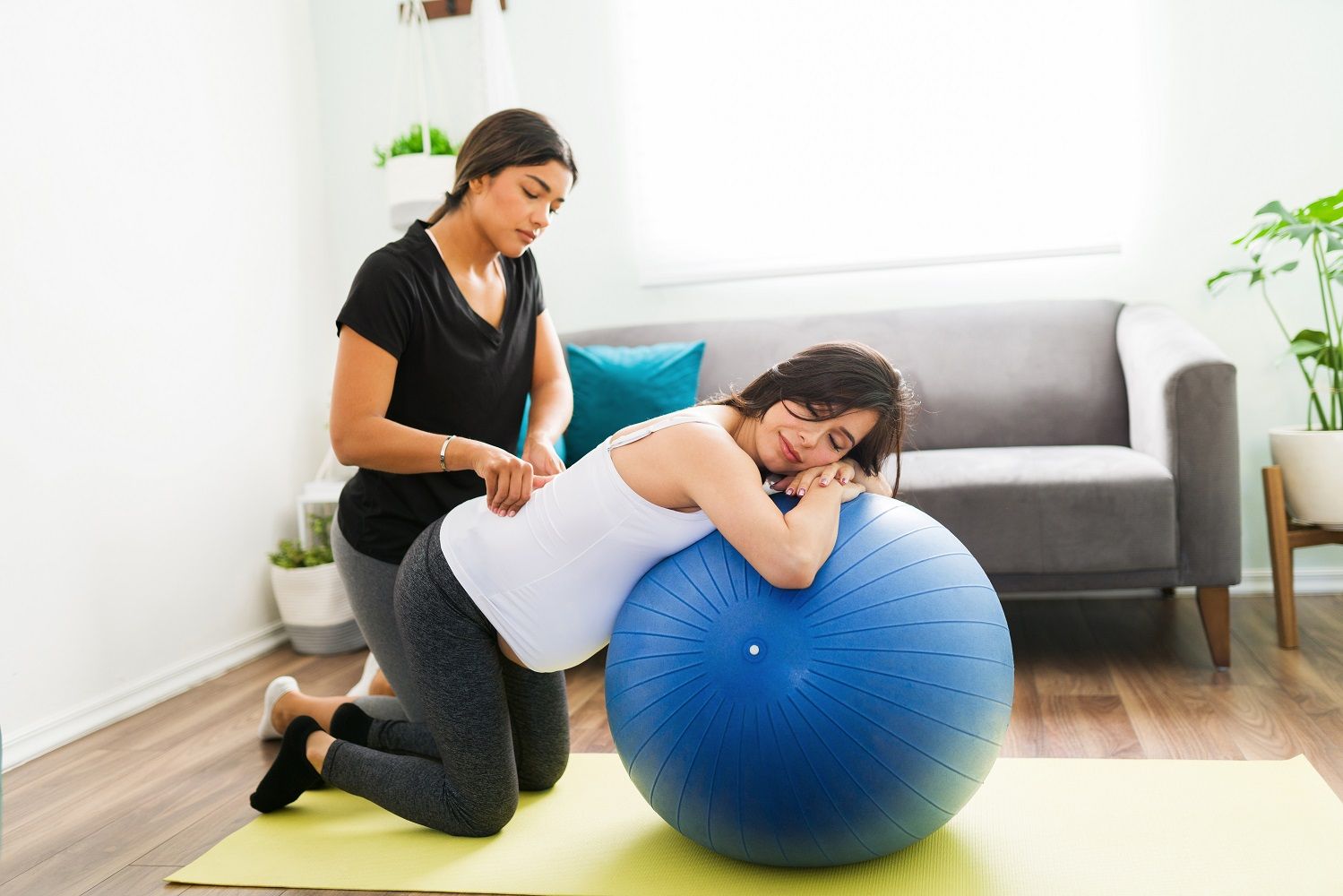
Preparing for childbirth through physiotherapy: a kind and effective approach
Childbirth preparation is a broad topic. I will therefore briefly discuss the various aspects in this article and explain how physiotherapy in perineal and pelvic rehabilitation can help you in your preparation.
I really like to compare childbirth to a marathon. You don't just decide to run a marathon overnight without preparation. You train for months in advance, mentally and physically preparing to complete this challenge. Childbirth usually lasts longer than a marathon and is even more intense! That's why it's important to prepare for it throughout the pregnancy. This preparation is also relevant for the partner!
What are the benefits of preparing for childbirth?
- Increase in partner support
- Reduce the fears associated with childbirth
- Increases self-efficacy in childbirth
- Reduces the rate of instrumentation (forceps, vacuum)
- Increases childbirth satisfaction
How can I prepare for childbirth?
There are several aspects to consider when preparing for childbirth, especially if it's the first time. Let's break down this preparation into 4 aspects: cognitive, mental, physical, and logistical.
Logistics preparation
Let's think:
- Would you prefer pregnancy monitoring with a doctor or with a midwife?
- Would you like a birth companion?
- What role do you want your partner to take during pregnancy and childbirth?
- What role are they ready to take on?
- Do you want to give birth at the hospital or at a birthing center?
- Who will take care of your older child(ren) during the delivery?
These are all relevant questions that will help you create a birth plan, organize, and prepare according to that plan.
Be aware that research shows that a sense of control over the situation and quality support contribute to reducing pain and increasing childbirth satisfaction.
The role of the person or persons who will accompany you during childbirth is important. They will therefore also need to be adequately prepared. Generally, this preparation is well established among birth companions, midwives, doctors, and nursing staff. Your significant other, who is not carrying the baby, is usually less prepared. That is why it is important to include them in your preparation process.
Should we make a birth plan?
The birth plan allows you to outline the key elements of your preferences regarding childbirth, the delivery room environment, the first moments with the baby, and decisions in case of complications.
After an in-depth discussion with your partner and the delivering physician, you can draft a plan, in bullet point form to facilitate communication with the care staff who will be present.
Cognitive preparation
Knowledge! Educate yourself on the physiological process of childbirth, the stages of labor, possible medical interventions, and the “normal” course of delivery. The more we know, the more we know what to expect and the easier it is to prepare for it on all levels. It is recommended for both parents to read the guide living better with our child from pregnancy to 2 years old and to do research on the topics you wish to delve into.
Prenatal classes are also an excellent source of information. You can contact the CSSS, the CLSC, or the family center in your area to find out what they offer in terms of classes. Be aware that they are generally not free. Registration usually takes place around the 12th week of pregnancy, and the classes typically start between the 20th and 25th week of pregnancy for about 4 to 6 weeks. These classes are usually attended with your partner.
Mental preparation
Emotional and mental preparation for childbirth is also an important aspect to consider. This unique and highly emotional event can sometimes be traumatic and bring up old wounds.
Do you have any fears? How do you plan to cope with the pain? What role would you like your partner to take during childbirth? What role are they willing to take?
Ask yourself questions and discuss different pain, stress, and anxiety management strategies with your partner and/or your birth companion (doula). There are various techniques that you can practice in advance such as meditation and hypnosis. Some mobile apps can guide you.
Physical preparation
Physical preparation includes a healthy diet, prenatal vitamins, healthy lifestyle habits, and physical activity. This is where your pelvic floor physiotherapist will be especially helpful.
Physically, the pelvic floor can be prepared for childbirth. From the 20th week of pregnancy, an internal evaluation can be performed to assess the function of the pelvic floor. Various strengthening, relaxation, and stretching techniques and exercises will be taught to prevent pelvic symptoms such as urinary incontinence and to prevent grade 3-4 perineal tears.
Regular physical activity is an excellent way to prepare your body for the intensity of childbirth. Working on muscular endurance, flexibility, and hip mobility can help you adopt different positions with less effort during labor and reduce pelvic pain. Several prenatal training programs are available online.
Deep breathing exercises and massage are also interesting techniques to explore. If you are considering a natural childbirth without an epidural, it is crucial to practice these techniques several weeks before delivery.
Among the methods that your pelvic floor physiotherapist can teach you, there are pressures on the pelvis and hips by a partner, positioning and leg movements.
What is childbirth preparation in perineal physiotherapy?
During this one and a half hour physiotherapy session, you and your partner will have the opportunity to learn about the biomechanics of the pelvis during childbirth depending on the baby's position and to practice.
Here are the topics that will be covered:
- Various pushing techniques;
- Different positions for labor and pushing;
- Pressure on the sacrum, pelvis, and hips by the partner;
- Pelvic floor stretching by the therapist and the partner;
- Advice and recommendations for postpartum;
- Handover of a document containing all the information from the session.
Be curious, listen to your body, follow your instincts, and prepare adequately by starting with perineal and pelvic physiotherapy!
To schedule an appointment, please contact us directly!
Emergency appointment available!
Bibliography:
Azam Bakhteh, Nasrin Jaberghaderi, Mansour Rezaei, Zahra AL-Sadat Naghibzadeh, Mitra Kolivand & Zahra Motaghi (2022) The effect of interventions in alleviating fear of childbirth in pregnant women: a systematic review, Journal of Reproductive and Infant Psychology, DOI: 10.1080/02646838.2022.2059458 (https://doi.org/10.1080/02646838.2022.2059458)
CISSS de Lanaudière. Prenatal Preparation (2014). https://www.cisss-lanaudiere.gouv.qc.ca/fileadmin/internet/cisss_lanaudiere/Documentation/Autres_publications/Fiches_d_information_prenatales/PreparationAccouchement.pdf (https://www.cisss-lanaudiere.gouv.qc.ca/fileadmin/internet/cisss_lanaudiere/Documentation/Autres_publications/Fiches_d_information_prenatales/PreparationAccouchement.pdf)
Gluck, O., Pinchas-Cohen, T., Hiaev, Z., Rubinstein, H., Bar, J. and Kovo, M. (2020), The impact of childbirth education classes on delivery outcome. Int J Gynecol Obstet, 148: 300-304. https://doi.org/10.1002/ijgo.13016 (https://doi.org/10.1002/ijgo.13016)
https://www.cisss-lanaudiere.gouv.qc.ca/fileadmin/internet/cisss_lanaudiere/Documentation/Autres_publications/Fiches_d_information_prenatales/PreparationAccouchement.pdf
Munkhondya, B.M.J., Munkhondya, T.E., Chirwa, E. et al. Efficacy of companion-integrated childbirth preparation for childbirth fear, self-efficacy, and maternal support in primigravid women in Malawi. BMC Pregnancy Childbirth 20, 48 (2020). https://doi.org/10.1186/s12884-019-2717-5 (https://doi.org/10.1186/s12884-019-2717-5)
Tuba Uçar & Zehra Golbasi (2019) Effect of an educational program based on cognitive behavioral techniques on fear of childbirth and the birth process, Journal of Psychosomatic Obstetrics & Gynecology, 40:2, 146-155, DOI: 10.1080/0167482X.2018.1453800 (https://doi.org/10.1080/0167482X.2018.1453800)
Back pain: how physiotherapy relieves lo...
Persistent lower back pain? Discover how physiotherapy can effectively relieve your backache with a ...
Lire plus...
Persistent Pain: Why Do Your Symptoms Fl...
Does your pain feel unpredictable? Discover the scientific mechanisms behind daily fluctuations and ...
Lire plus...
Beyond Recovery: Understanding Functiona...
our pain has decreased, but are you truly ready to return to your daily routine? Learn how Functiona...
Lire plus...