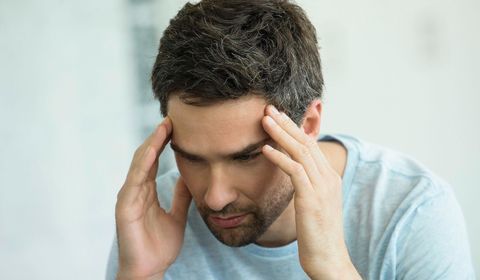
How can osteopathy naturally relieve headaches?
According to the World Health Organization (WHO), 50% of adults experience a headache over the course of a year. Moreover, between 1.7 to 4% of the global adult population suffers from headaches for at least 15 days per month (1). Are you one of them? This article might interest you!
WHAT IS A HEADACHE?
A headache is defined as a pain in the head, regardless of the cause. There are two types of headache: primary and secondary headaches. Primary headaches are not caused by another disorder and usually include tension headaches and migraines. Less frequently, cluster headaches. As for secondary headaches, they are caused by another condition stemming from the brain, eyes, nose, throat, etc. (2)
HEADACHE OR MIGRAINE, HOW TO DISTINGUISH THEM?
Here are the distinguishing features of the most common primary headaches, although only a physician can make a medical diagnosis.
TENSION HEADACHE (3)
To be considered a tension headache, at least two of the following four criteria must be present:
- Localized pain on both sides of the head
- Sensation of pressure (non-pulsatile)
- Light or moderate intensity
- Does not worsen with daily physical activities such as walking or climbing stairs
The episode must include the following two criteria:
- No nausea or vomiting
- No more than one episode of sensitivity to light (photophobia) or to sounds (phonophobia).
MIGRAINE WITHOUT AURA (4)
For an episode to be considered a migraine, it must meet the five listed criteria below:
- Headache lasting from 4 to 72 hours
- Localized pain on one side
- Pulsating sensation
- Moderate or severe pain
- Enhanced by daily physical activities
The episode must include one of the two criteria following:
- Presence of nausea and/or vomiting
- Sensitivity to light (photophobia) or to sounds (phonophobia)
WHAT ARE THE CAUSES OF HEADACHES?
The causes of headaches are varied, here are a few:
- Stress or anxiety
- Sleep disorders
- Neck pain or cervical tension
- Jaw tensions
- Eye strain
- The posture
- Menstrual cycle
- Etc.
HOW CAN AN OSTEOPATH HELP ME?
After a discussion to understand the problem, the osteopath will perform a comprehensive evaluation to identify the areas where mobility seems to be affected. These areas may include the skull, muscles, bones, fascia, etc. Thanks to their techniques, the osteopath can then treat the previously established areas to optimize body mobility and help the body regulate itself in order to relieve pain. During the treatment, they will explain to you what they are working on in terms of anatomy and your symptoms. If necessary, advice and exercises are given.
Schedule an appointment by clicking here.WHEN SHOULD I SEE A DOCTOR?
Sometimes, a headache can indicate a problem that is primarily medical in nature. If you experience these symptoms along with your headache, you should consult a doctor:
- Presence of fever or neck stiffness
- Following a fall, an accident, or a blow to the head
- Occurs suddenly or is of severe intensity
- Presence of other symptoms such as vomiting, facial or body paralysis, confusion, fainting, visual disturbances, confusion, etc.
IS THERE A WAY TO PREVENT HEADACHES?
Initially, it may be relevant to identify what could be the cause of your headaches (sleep, stress, posture, muscle tension, etc.). Subsequently, adjust your behavior according to the identified cause. Otherwise, here are some tips that might help you when experiencing headaches:
- Posture : Always pay attention to your posture, not just when you're working. We often opt for less-than-ideal positions when we're in the car, watching television, or on our mobile phones.
- Hydration : It is recommended to drink between 1.5 and 2 L of water per day. Dehydration can also be a factor in headaches.
- Rest: Taking a moment to rest and withdraw from noise and lights can be beneficial for a headache.
- Respiration: Doing a breathing exercise such as cardiac coherence can be beneficial in reducing stress.
https://fr.vecteezy.com/vector-art/5739380-girl-performing-breathing-exercise-exhaling-and-inhaling-deep-breathing-yoga-health-and-relaxation-vector-illustration
How to practice heart coherence ?
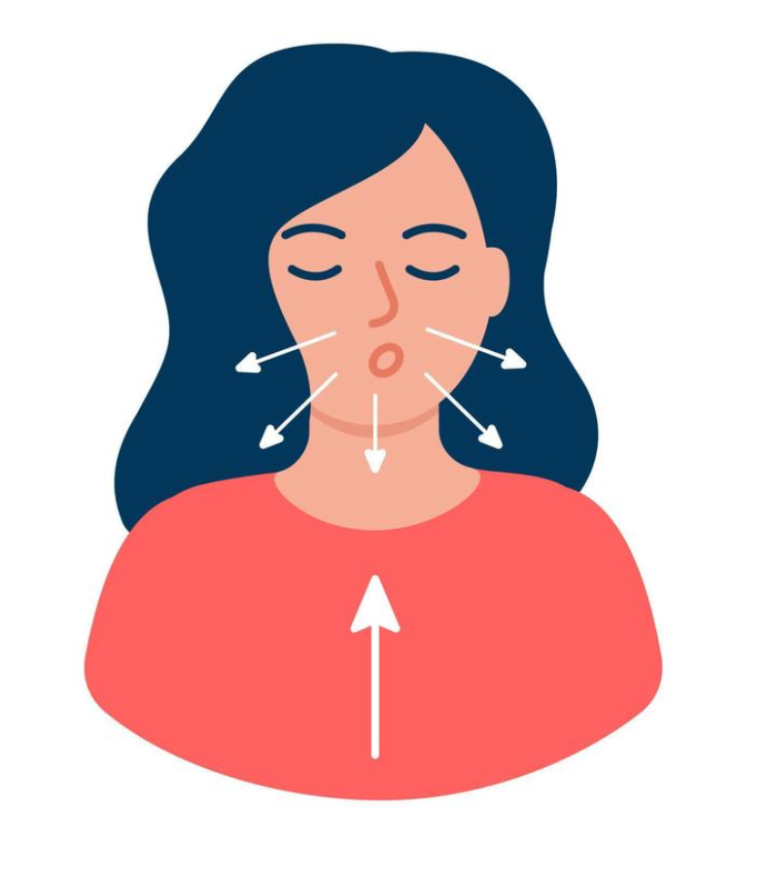
The number to remember is 365:
- 3 : 3 times a day
- 6 : 6 breaths per minute
- 5 : for 5 minutes
It should be noted that several mobile applications offer this breathing exercise to facilitate its execution.
The benefits of heart coherence are numerous: management of stress, anxiety and their consequences on cardiovascular health, immunity; sleep disorders; improvement of learning and decision-making, etc. (5)
REFERENCES
(1) World Health Organization. (2016, April 8). Headache. World Health Organization. https://www.who.int/fr/news-room/fact-sheets/detail/headache-disorders (https://www.who.int/fr/news-room/fact-sheets/detail/headache-disorders)
(2) Silberstein, S. D. (2021, July). Overview of Headaches. The Merck Manual. https://www.merckmanuals.com/fr-ca/accueil/troubles-du-cerveau,-de-la-moelle-épinière-et-des-nerfs/céphalées/présentation-des-céphalées (https://www.merckmanuals.com/fr-ca/accueil/troubles-du-cerveau,-de-la-moelle-épinière-et-des-nerfs/céphalées/présentation-des-céphalées)
(3) Loder, E., Rizzoli, P. (2008) Tension-type headache. BMJ, 336 (7635) 88-92. https://doi.org/10.1136/bmj.39412.705868.AD (https://doi.org/10.1136%2Fbmj.39412.705868.AD)
(4) International Headache Society. Migraine without aura. https://ichd-3.org/1-migraine/1-1-migraine-without-aura/ (https://ichd-3.org/1-migraine/1-1-migraine-without-aura/)
(5) O’Hare, D. (2012). Heart Coherence: 365. Daily Guide to Cardiac Coherence. Vergèze, France: Thierry Souccar Publishing.
Back pain: how physiotherapy relieves lo...
Persistent lower back pain? Discover how physiotherapy can effectively relieve your backache with a ...
Lire plus...
Persistent Pain: Why Do Your Symptoms Fl...
Does your pain feel unpredictable? Discover the scientific mechanisms behind daily fluctuations and ...
Lire plus...
Beyond Recovery: Understanding Functiona...
our pain has decreased, but are you truly ready to return to your daily routine? Learn how Functiona...
Lire plus...